1825
The Stockton and Darlington Railway opens
It took more than a smoking engine to redraw the map.
Step into this moment ↗What did this moment leave behind?
01 / THE DOCUMENTED EVENT
What happened?
On 27 September 1825 the Stockton and Darlington Railway opened with Locomotion No. 1 hauling wagons and passengers. It marks steam traction on a public railway, not the invention of railways or locomotives; early passenger operations were not exclusively steam-powered.
1825 marks the Stockton and Darlington Railway’s steam-hauled opening on 27 September, distinct from earlier railways and locomotives and subsequent passenger operating methods.
Sources and historical context
- National Railway Museum — Shildon and Locomotion No.1 ↗
Supports The 27 September 1825 opening, steam haulage and earlier locomotives.
Source relationship Museum interpretation shares the railway opening record with local histories.
- Stockton Borough Council Heritage — Where Passenger Railways Began ↗
Supports Opening date and subsequent horse-drawn passenger operations by contractors.
Source relationship Separately edited local-government history, not an independent eyewitness record.
The image, its author and source
- Work
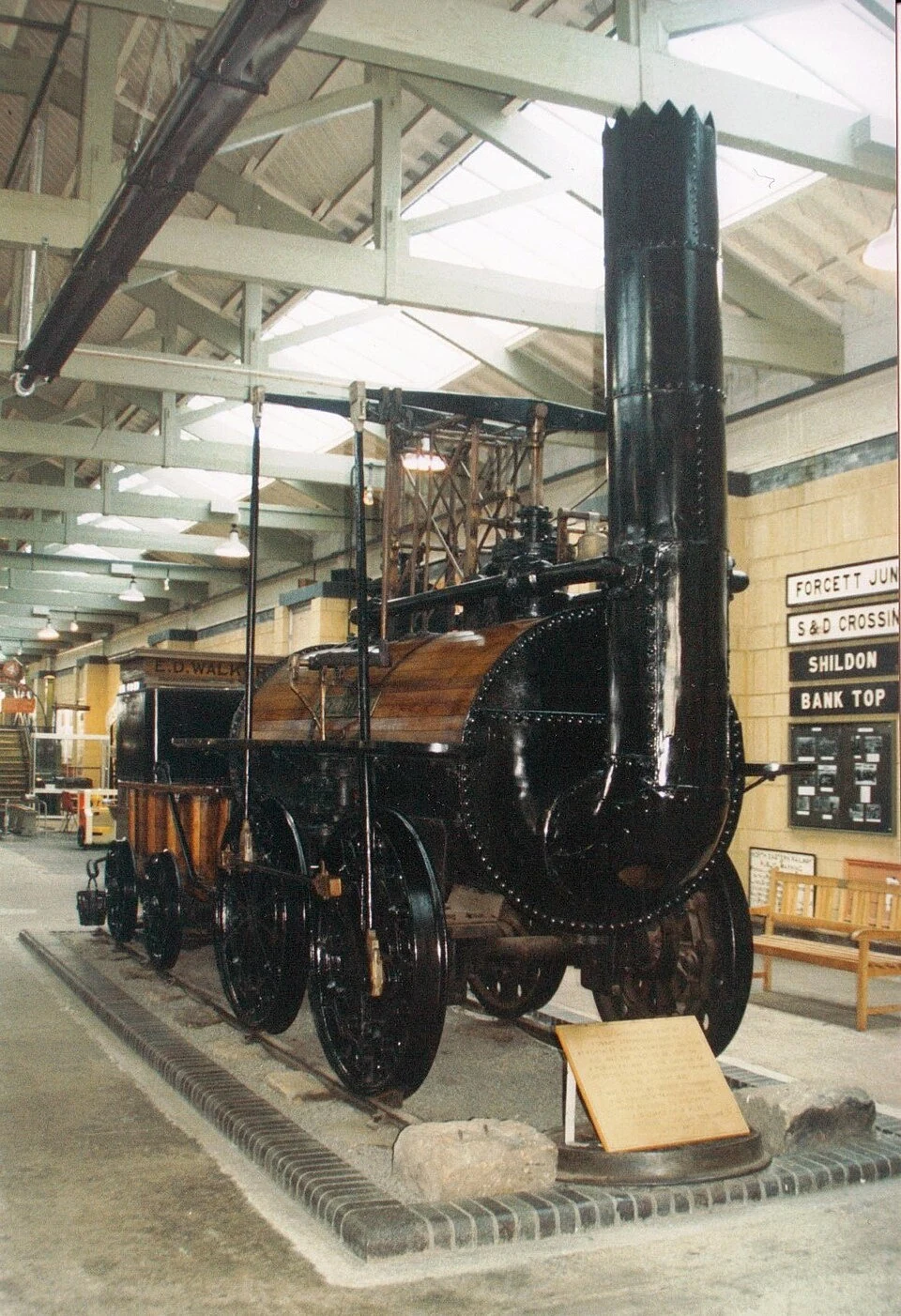
- Locomotion No. 1
- Creator
- Kim Traynor
- Work date
- Locomotive: 1825; photograph: 2015
- Collection and image
- Kim Traynor
- How the image relates to the event
- Later photograph of the original locomotive
- Context
- The original locomotive displayed in Darlington, directly connected with the 1825 opening. A museum photograph, not the inaugural journey.
- Rights
- CC BY-SA 4.0
- Image preparation
- The source image’s full composition and proportions are preserved; no AI generation, repainting or invented detail.
02 / THE MECHANISM
Why did it change the world?
An engine became useful infrastructure through rights of way, destinations and operations. Reliable connections could reorganise the cost and timing of moving goods and people; towns benefited from access, not maximum speed alone.
03 / THE OTHER SIDE
What must not be overlooked?
Fixed routes require land and capital before demand is certain. Benefits may be uneven, while noise, safety and maintenance costs persist. Unused capacity remains expensive infrastructure.
04 / BACK TO TODAY
Where does this change our business thinking?
Start with the activity at both ends before choosing infrastructure. Logistics hubs and commuter services need demand, schedules and connections. Advanced equipment at one point does not ensure an efficient whole journey.
05 / A HYPOTHESIS TO TEST
Where could a small experiment begin?
Pilot shared employee shuttles between two established industrial-area stops using leased vehicles. Measure on-time arrivals, occupancy and employer renewal intent before investing in higher capacity or permanent facilities.
A QUESTION TO TAKE WITH YOU