1215
Magna Carta is sealed
A crisis of royal power left a text demanding reasons from authority.
Step into this moment ↗What did this moment leave behind?
01 / THE DOCUMENTED EVENT
What happened?
In 1215, English barons compelled King John to accept Magna Carta amid disputes over taxation, property and justice. John repudiated it; later rulers reissued revised versions. Its significance grew through repeated contest and reinterpretation, not instant democracy.
15 June 1215 marks John’s acceptance and sealing at Runnymede, not a modern signing ceremony or completion of later statutory versions.
Sources and historical context
- UK Parliament — 1215 Magna Carta ↗
Supports The 1215 baronial dispute, free-man provisions and later reissues.
Source relationship Parliament’s exhibition shares the charter and reception history with its library briefing.
- House of Commons Library, David Torrance — Magna Carta: Does it still matter? ↗
Supports Agreement of 15 June 1215, annulment, reissues and limits to rights myths.
Source relationship A named researcher within Parliament offers analysis correcting simplified claims, not wholly independent underlying records.
The image, its author and source
- Work
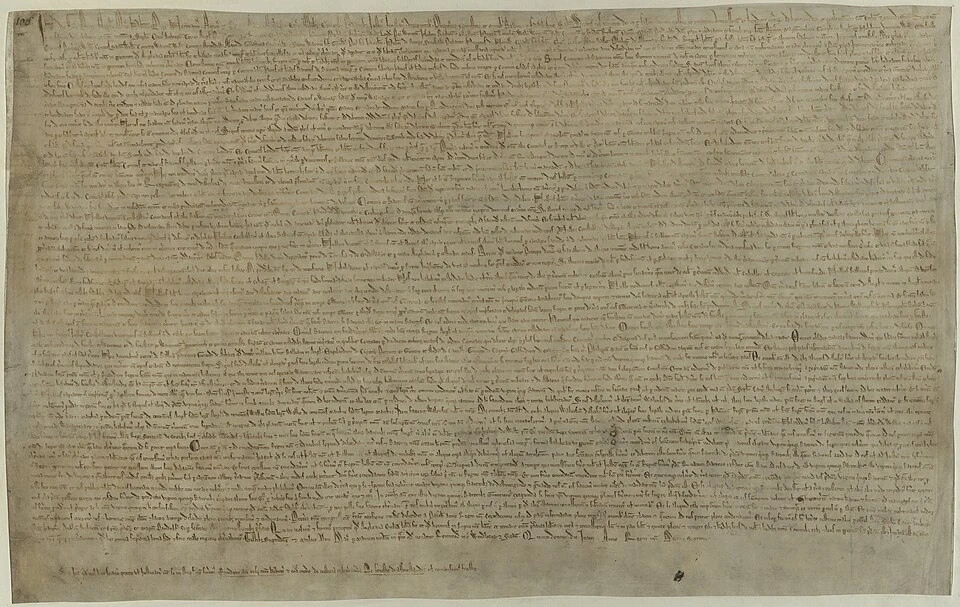
- Magna Carta, surviving 1215 exemplar
- Creator
- English royal scribes
- Work date
- 1215
- Collection and image
- English royal scribes / Wikimedia Commons
- How the image relates to the event
- Original object / historical artefact
- Context
- The original parchment in the British Library, Cotton MS Augustus II 106. It records a particular political settlement. Its later status as a rights symbol must not imply universal equality in 1215.
- Rights
- CC0
- Image preparation
- The source image’s full composition and proportions are preserved; no AI generation, repainting or invented detail.
02 / THE MECHANISM
Why did it change the world?
Written commitments gave disputes a common reference and later generations language against arbitrary power. Applying that language to new groups required political coalitions and legal practice. A text can become a foothold without automatically widening protection.
03 / THE OTHER SIDE
What must not be overlooked?
The charter addressed royal relations with particular privileged groups; famous provisions referred to free men, not equal protection for every resident. Conflict and bargaining continued. Ignoring exclusions credits the original settlement with rights achieved much later.
04 / BACK TO TODAY
Where does this change our business thinking?
A business analogy is enforceable limits on founders, managers and controlling shareholders. Authority rules, amendment procedures and appeals must agree in practice. An impressive charter cannot replace decision records and credible dispute handling.
05 / A HYPOTHESIS TO TEST
Where could a small experiment begin?
For a family business considering outside shareholders, pilot decision rules through purchasing, related-party deals and dividends. Test whether participants independently describe the same process, exceptions are recorded and disputes resolve faster—not how many pages are produced.
A QUESTION TO TAKE WITH YOU