1970
The first Earth Day
Environmental concern entered the streets as a shared public issue.
Step into this moment ↗What did this moment leave behind?
01 / THE DOCUMENTED EVENT
What happened?
On 22 April 1970, rallies, teach-ins and discussions across the United States connected pollution, conservation and everyday surroundings. Schools, local groups and museums participated. This was a major mobilisation, not the beginning of environmental awareness.
1970 marks the large US Earth Day observance on 22 April, not the origin of every environmental movement or Earth Day initiative.
Sources and historical context
- EPA — The Spirit of the First Earth Day ↗
Supports The 22 April 1970 US Earth Day and its organising networks.
Source relationship An EPA retrospective from 1990; attendance is an estimate.
- Smithsonian Archives — The Smithsonian’s First Earth Day ↗
Supports Smithsonian exhibitions and discussion programmes on the first Earth Day.
Source relationship Institutional archives document separate activities, not a national attendance census.
The image, its author and source
- Work
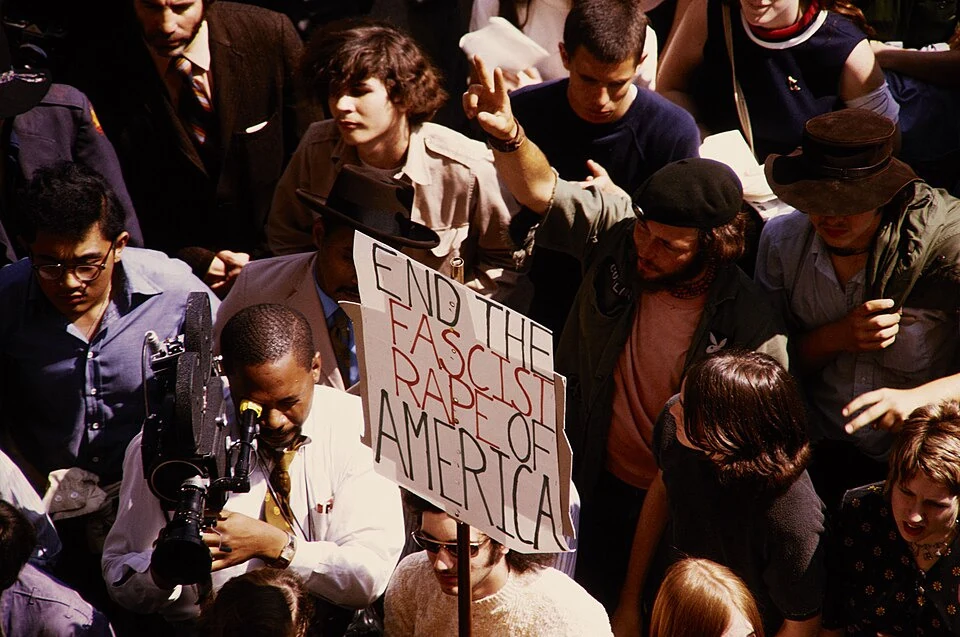
- Protesters at the first Earth Day flag ceremony
- Creator
- Cecil W. Stoughton / National Park Service
- Work date
- 22 April 1970
- Collection and image
- Cecil W. Stoughton / National Park Service
- How the image relates to the event
- Historical record directly related to the event
- Context
- National Park Service historical collection, photographed in Washington, D.C. A record of public participation and differing voices on the day.
- Rights
- Public domain
- Image preparation
- The source image’s full composition and proportions are preserved; no AI generation, repainting or invented detail.
02 / THE MECHANISM
Why did it change the world?
A shared date and accessible activities helped local concerns enter wider public debate. Expert knowledge could meet everyday experience. Visibility was a beginning; durable change still required organisations, policy and actions that could be examined over time.
03 / THE OTHER SIDE
What must not be overlooked?
Symbolic participation can be mistaken for improvement. A large event does not prove pollution fell, and may obscure unequal burdens. Follow-up and affected communities’ participation are essential.
04 / BACK TO TODAY
Where does this change our business thinking?
Corporate environmental responsibility can begin with an auditable operating problem. Assigning ownership, baselines and methods for water, waste or energy can turn participation into a management capability.
05 / A HYPOTHESIS TO TEST
Where could a small experiment begin?
Pilot a three-month waste audit with a business park, involving cleaners and tenants. Assess contamination, collection costs and participant feedback, retaining negative results as well as improvements.
A QUESTION TO TAKE WITH YOU